Case studies · 02 · Lead Engine
The Engine That Sold Itself
The engine wrote a cold email. A prospect replied “I'm interested.” We told them the truth — the email they liked was written by a machine — and the meeting went on the calendar anyway. Names and companies redacted.
The setup
This campaign was our own — the client was us. We pointed the engine at recruiting agencies, about the hardest room a cold email can walk into: outreach is their day job, and they can smell a template from the subject line. It ran the same pipeline every client campaign gets — fresh list, every address verified, every email researched and written one agency at a time.
The email, and the reply
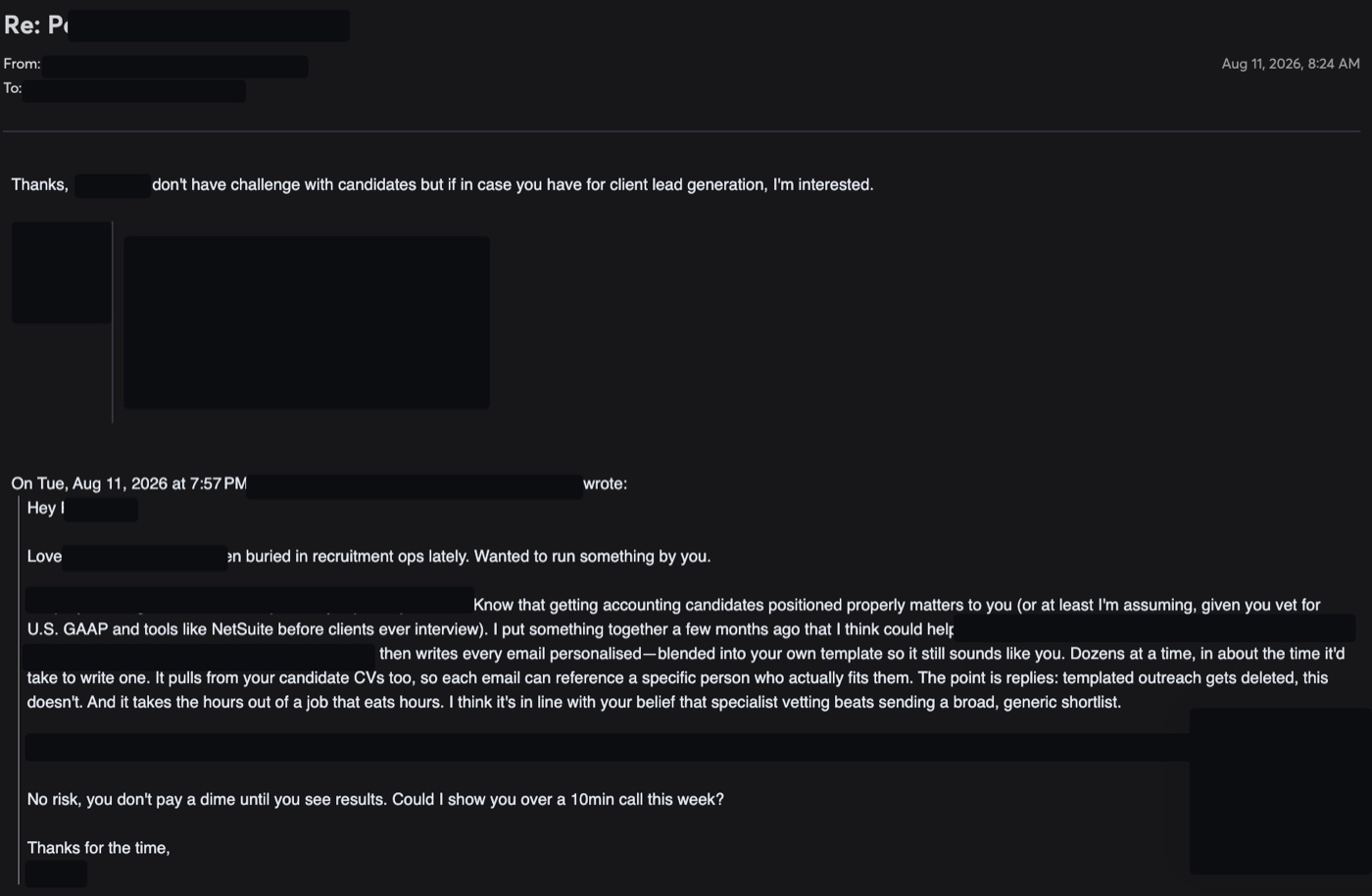
The full thread, untouched except for redaction. Notice the personalization: the engine read how this agency actually vets candidates and wrote a line only they could receive. And notice the reply — candidates weren't their problem, so they redirected: “…for client lead generation, I'm interested.”
The reveal
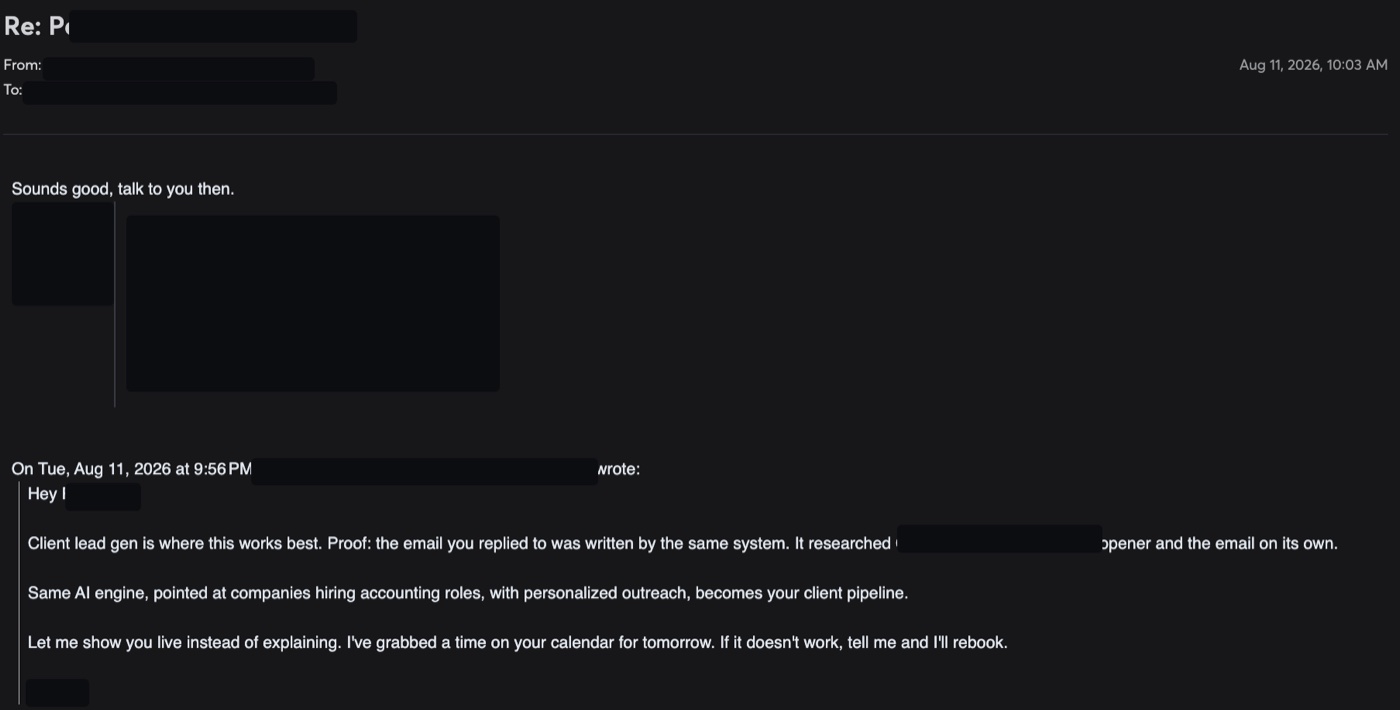
We could have just said yes and taken the meeting. Instead we answered with the truth: “the email you replied to was written by the same system” — it researched them and wrote the opener and the email on its own. The same engine, pointed at the companies they want as clients, is the exact product they were asking about. The email wasn't describing the demo. It was the demo.
Then one low-friction close — a time already on the calendar, “if it doesn't work, tell me and I'll rebook” — and the prospect, now knowing a machine wrote the email they liked, answered: “Sounds good, talk to you then.”
The campaign behind it
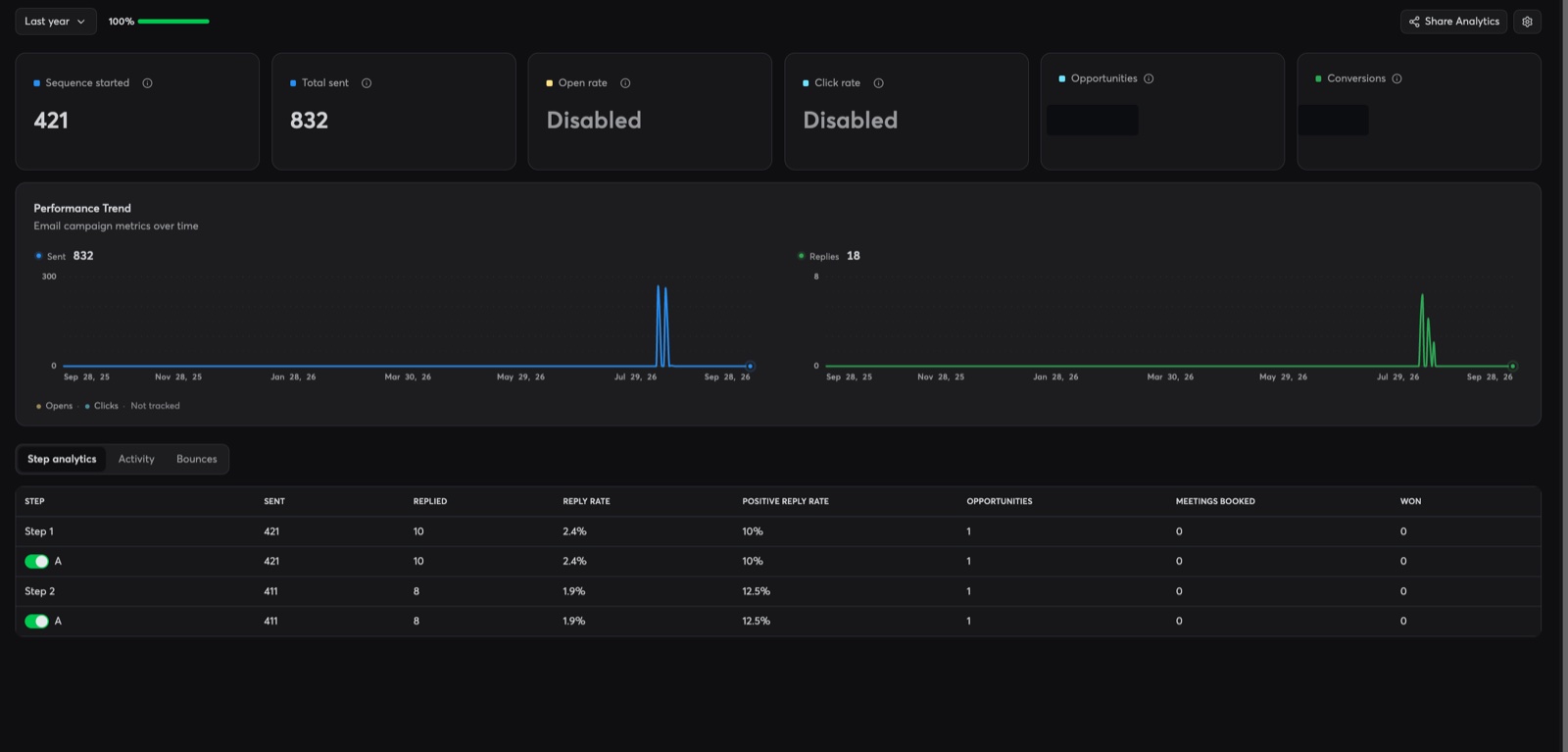
The thread came out of an ordinary two-step campaign, shown here straight from the sending tool. Worth reading: the reply curve follows the send days closely, and open and click tracking say “Disabled” because we keep them off on purpose — tracking pixels and rewritten links are spam signals, and we'd rather land in the inbox than measure opens. Replies are the number that matters anyway.
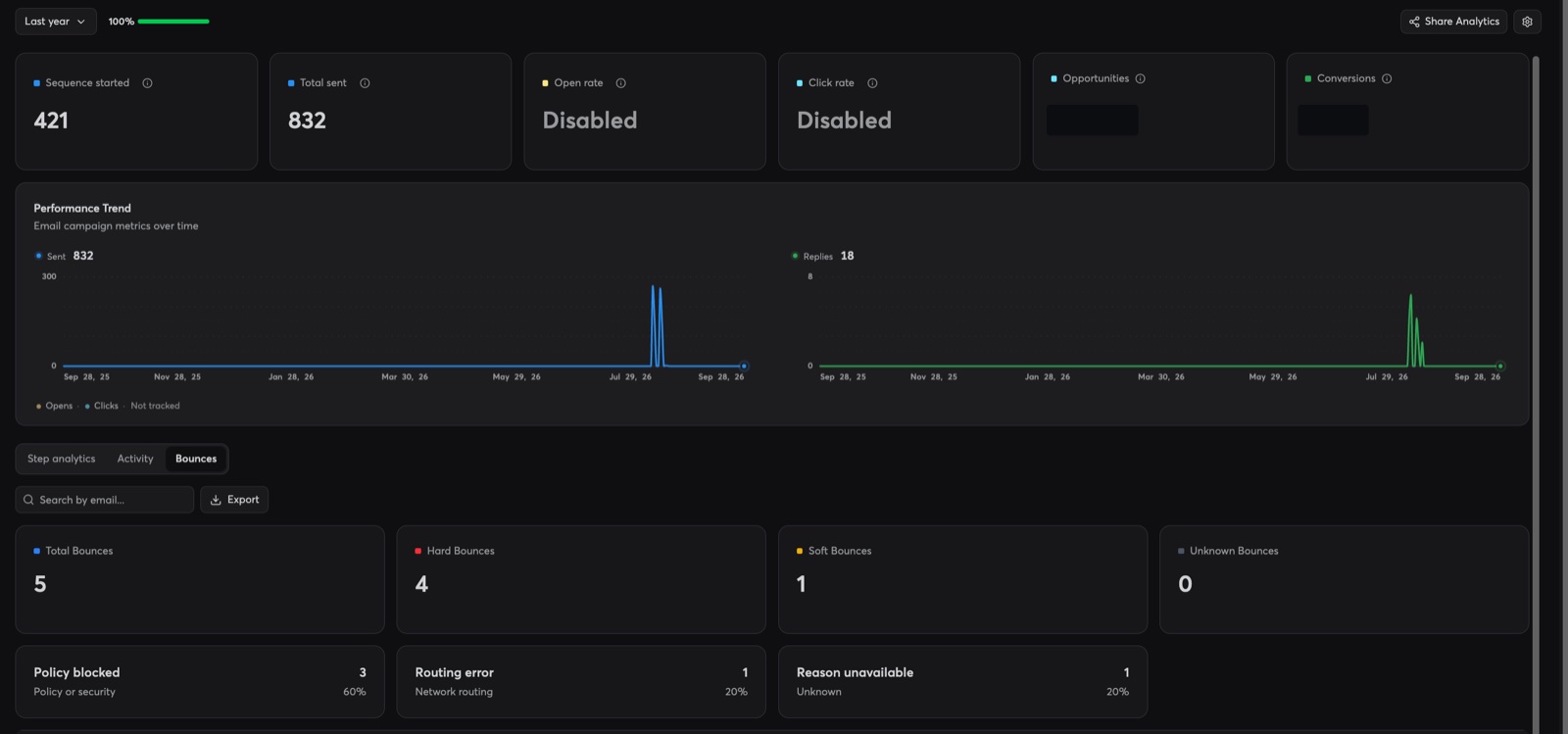
And the bounce tab: a handful of bounces against the full run, most of them a receiving server's own policy rules rather than bad addresses. That's what verifying every address before send buys — the deliverability that keeps the next campaign landing.
Why this one matters
Anyone can say their personalization works. This campaign is the cleanest test we have: the prospect judged the email on its own merits, replied, and then booked the call knowing a machine wrote it. The engine didn't just pass — it was the pitch.